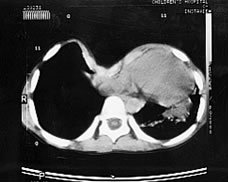


Pectus Excavatum
What Is Pectus Excavatum?
Pectus excavatum, commonly known as "sunken chest" or "funnel chest," is the most common congenital chest wall deformity. It occurs when the breastbone (sternum) and surrounding ribs grow inward, creating a noticeable depression in the center of the chest.
The condition develops because of abnormal growth of the cartilage that connects the ribs to the sternum. The severity can vary considerably from person to person. Some individuals have only a mild indentation, while others develop a deep depression that can affect both appearance and physical function.
Pectus excavatum affects approximately 1 in every 400 children and occurs more frequently in males than females. In some cases, it is associated with connective tissue disorders such as Marfan syndrome or Ehlers-Danlos syndrome.
Signs and Symptoms
Many people with pectus excavatum are concerned about the appearance of their chest. However, the condition can also cause physical symptoms, particularly when the deformity is moderate to severe.
Common symptoms may include:
Shortness of breath, especially during exercise
Reduced exercise tolerance
Chest pain or discomfort
Fatigue
Heart palpitations
Poor posture or rounded shoulders
Patients often have a slender body habitus with forward-sloping shoulders and a tendency to slouch. The chest depression may be symmetrical or asymmetrical, and in some cases the sternum may be rotated.
Does Pectus Excavatum Get Worse Over Time?
In many patients, the chest depression is visible at birth or develops during early childhood. The deformity typically becomes more pronounced as a child grows and often worsens during the adolescent growth spurt, when the chest wall is developing rapidly.
Once skeletal growth is complete, usually around age 18, the chest wall becomes more rigid and the deformity generally stabilizes. Although the shape of the chest may no longer change significantly, symptoms can become more noticeable during adulthood. Some adults experience increasing shortness of breath, reduced endurance, chest discomfort, or worsening posture over time.
For this reason, evaluation by an experienced pectus specialist is important, even for adults who have lived with the condition for many years.
How Is Severity Measured?
One of the most commonly used tools for measuring the severity of pectus excavatum is the Haller Index, a calculation obtained from imaging studies of the chest.
A normal chest typically has a Haller Index between 2.0 and 2.5. A measurement of approximately 3.25 or greater is generally considered severe enough to warrant consideration for surgical correction. The higher the Haller Index, the more significant the chest wall depression.
During your evaluation, Dr. LoSasso will determine which imaging studies are appropriate and assess how the deformity may be affecting your heart, lungs, posture, and overall quality of life.
Can Exercise Correct Pectus Excavatum?
Exercise and weight training cannot correct the underlying chest wall deformity. However, strengthening the chest, back, and core muscles can improve posture, enhance physical conditioning, and reduce some symptoms associated with pectus excavatum.
Regular exercise may help patients feel stronger and improve endurance, but it does not reverse the structural depression of the sternum.
For patients with mild deformities, physical therapy and posture-focused exercise programs may be beneficial. For those with moderate to severe pectus excavatum, surgical correction may be the most effective treatment option.
Dr. LoSasso encourages all patients to maintain an active lifestyle and often recommends physical therapy as part of both preoperative preparation and postoperative recovery following the Nuss Procedure.
When Should You See a Specialist?
If you or your child has pectus excavatum and experiences shortness of breath, chest pain, exercise limitations, fatigue, or concerns about appearance, an evaluation can help determine whether treatment is appropriate.
Dr. Barry LoSasso has been treating patients with pectus excavatum since 1999 and has performed more than 1,500 Nuss Procedures. He provides comprehensive evaluations for children, adolescents, and adults to determine the best treatment approach for each individual patient.